
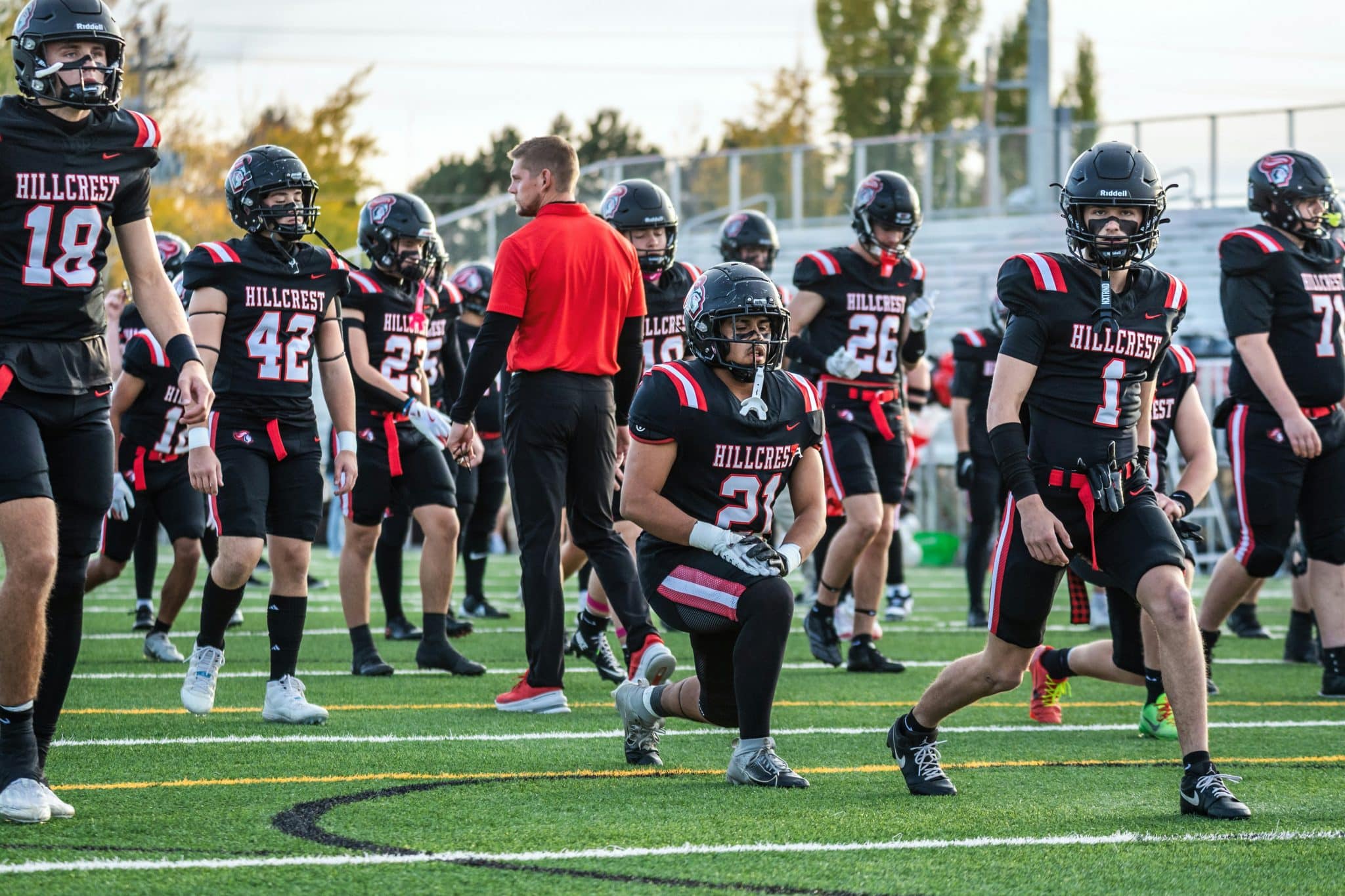
The Enrichery recently conducted an interview with our recruiting specialist, Georgia Polley, who has two sons that were recruited to play college football. We asked her about how she helped her sons achieve their academic and athletic goals, what her experience as the parent of a talented high school athlete was like, and how aspiring college athletes can stand out.
1. Can you share your family’s story and how your two student-athletes ultimately signed to play Division I football?
Our oldest son was a born athlete—he would cry when baseball practice was cancelled. Honestly, it wasn’t until his first call from Baylor University, offering him a scholarship to play football, that we really knew he might have the opportunity to play college football at the Division I level. He was in the spring of his sophomore year in high school and playing basketball—and he was starting to get noticed. But when the offer to play football came in, he pivoted away from high-level basketball and started focusing on football.
As for our youngest son, he got to watch his older brother, and it dawned on him that he could also play football in college if he put in the work. In middle school, he started going to the high school football meetings before school, and he’d join his older brother at his workouts outside of school. He put in a lot of work to earn his offers. He, too, received an offer from Baylor the summer after his sophomore year, but his high academics earned him Ivy League offers starting his junior year.
2. When did you first realize college athletics might be part of their future, and what surprised you most about the recruiting process?
We always sort of thought our oldest would play sports—just didn’t know which one! The kid was playing catch before he could walk.
What surprised us the most is just how hard it is on these kids—the rejection, the “sure, kid, we’re going to recruit you hard” then never hearing back from a coach. These are teenagers!
3. What habits or skills did you focus on in the early years that helped build a strong foundation for both academics and athletics?
Definitely being a team player, respecting your teammates and coaches even if you disagree with them, consistency—never missing practice—and putting in the work outside of practice.
Putting in the work in academics as well. If you need help, ask! Our oldest started at The Enrichery in 8th grade for help with Algebra, and he ended up really liking the support.
4. How can parents support young athletes without creating pressure or burnout?
Let it be their decision. We never forced our boys to play a sport. In fact, our youngest quit a lacrosse team in between games (which went against every grain of my being). It was the right thing for him to do for his mental health.
We also learned to ask if they wanted feedback after a game—sometimes they’re open to it, sometimes they just need to put it behind them and focus on the next game.
5. What were your top priorities during freshman and sophomore year to keep college opportunities open?
Keep working—keep working on your skills, keep working in the classroom.
6. What changed during junior year in terms of recruiting attention and communication with college coaches?
My kids would get a lot of phone calls from coaches at all times of day—sometimes even having to step out of class. They learned to always answer their phone in an appropriate manner, to call someone back in a timely manner. Their phone etiquette is probably better than mine now!
Want this for your student?
- One-on-one academic coaching, K–12
- Executive Function Coaching
- Prep for the ACT, SAT & ISEE
- College application & essay strategy
- 96% of our families come from referrals
Let's Build Your Student's Success Plan
Tell us about your student, and our team will personally recommend the right services, coach, and next steps to help them achieve their goals.
Tell us where they are. We’ll help map the way forward.
7. What kind of support or guidance did you get from your sons’ football coaches? What support or guidance did you receive from high school teachers and counselors?
Coaches want these kids to succeed. Our head football coach handles a lot of phone calls from college coaches. Usually a college coach will call the head football coach first to ask about a kid, so having a good relationship with your head coach is a must.
Our high school counselors were on top of everything! I didn’t have it marked that the counselor could send a transcript to a school at first, and I got a phone call in the middle of the day from the counselor, telling me that Stanford wanted a transcript, and could I give permission for it to be sent.
8. What steps helped your students gain exposure and stand out to college programs?
Camps. Go to the college camps where you’re interested in playing. Start local. If your student has high academics, get to Rice, Northwestern, Duke, etc.
9. How did academic performance, organization, and test scores influence recruiting opportunities?
You definitely need strong academics and good test scores for high academic schools—no matter your athletic talent. For our youngest, having high academics and test scores opened up the possibility of playing at Rice University and schools in the Ivy League.
10. What advice would you give parents of younger students who hope their child might one day compete in college athletics?
They have to want it, not you. They have to put in the work before school and after school. You don’t always see the work other athletes are putting in to get to where they want to be—not everything is shared on social media. If your student wants to stand out, then they have to do what others are not willing to do: Getting up at 5 A.M. for a workout or team meeting, going to tutoring on a Sunday afternoon if they need help with a subject.
And as a parent, this means supporting them as they put in the work. I used to drive 45 minutes each way to take the boys to their strength trainer before my oldest could drive. When he left for college, I took the youngest until he could drive. Our summer vacations in high school consisted of football camps or 7-on-7 tournaments—for 4 years straight. Their hard work paid off. Our oldest will graduate from Baylor University next December with zero college debt or expenses. Our youngest will attend the Wharton School of Business at the University of Pennsylvania next fall. Ivy League schools do not offer merit- or athletic-based scholarships, but it’s an opportunity he could not turn down.
11. What led your family to seek support from The Enrichery, and how did that support impact your students’ journeys?
Our oldest needed extra help in math—he’s a humanities kid and studying journalism now. Going to the Enrichery helped him gain confidence in school.
Our youngest did test prep and college essay work through The Enrichery. Having someone walk through his application to the University of Pennsylvania and get it done in a timely manner really helped with all our anxiousness. For Ivy League schools, you still go through the application process like every other student and wait on your decision letter. We knew he was in good hands—that his application and essays were of the highest quality.
If your student is an athlete working to balance the demands of practice and classes, or if they are an athlete applying to highly selective universities, consider scheduling a consultation with The Enrichery today!